Your Holiness has been Christ's Vicar for seven months now. Things tend to grind slowly in the Vatican but be that as it may it is now long past the time for Your Holiness to put an end to this ridiculous persecution of the Franciscan Friars of the Immaculate. Surely, enough is enough.
This whole miserable charade is a blot upon the Church and, with all the respect due to your sacred office, it is a blot upon Yourself. Unless all written reports on this case are totally false, which would be difficult to believe, then what has been done to this Order is an act of rank injustice which must be corrected by Your Holiness, and without delay. We here join our voice with many others in calling for the immediate dismissal of Father Volpi who has acted in a way that does no credit to him either as a man or indeed even as a priest of God. The dismissal of this man would be only a first step in bringing some charity back into this whole sad episode.
What the world sees, Your Holiness, is simply this: that a religious order which has availed itself of the use of the exquisitely beautiful ancient rite of Holy Mass is being dragooned into abandoning their rights as Catholics to this Mass, as guaranteed by your predecessor, and being forced to conform exclusively to the banalities inherent in the misbegotten Novus Ordo Missae, and furthermore that it is actually being punished severely for its attachment to the Usus Antiquior. That is what the world sees, Your Holiness, and that is a terrible thing for Catholics and those sympathetic to the Church to have to see.
The One, Holy, Catholic and Apostolic Church is a Monarchy. When a gross injustice has been committed in the Kingdom, the Monarch must act. When a scandal rears its ugly head in the Church that scandal must be ended promptly. We as Catholics do have some rights, too, that need to be respected. In the case of the Franciscan Friars of the Immaculate we have two rights that need to be addressed: first, we have a perfect right to the Traditional Mass, and have always had that right; second, we have the right to know the facts of this case. If there has been some real wrongdoing by this Order we need to know what that is. And following upon this, whatever fault they may or may not have committed, Catholics want to know why their punishment consists of refusing them their God-given rights to Holy Mass in the Ancient Rite of the Church and in purging the Order of anyone associated with its founder, Father Manelli.
This chicanery vis-a-vis the traditional Mass has to cease now. The Church has suffered forty uninspiring years of the new Mass. It has been a spectacular failure. Let those who wish to cling to this failure continue to do so. But the persecution of those who do not want to cling to it needs to come to its ignoble end.
The Vicar of Christ can put a stop to this outrage. The Catholic world awaits the justice that must be done.
Friday, December 13, 2013

Wednesday, December 11, 2013
A CENTURY OF MODERNISM
We are pleased to present in three parts the study of the heresy of Modernism by the French Catholic journalist and intellectual, Arnaud de Lassus. Due to the length of the piece we will be presenting it in three parts, the first of which follows below. Having read de Lassus for over thirty years now, and having had the great pleasure of meeting him some years ago, we can say that his is one of the fine original minds that have brought tremendous clarity to the complex issues affecting the Catholic Church.
We are grateful, once again, to Anthony Fraser over at Apropos for providing the translation of the piece which originally appeared in his own publication in 2008. For those who would like a printable copy in pdf form of the entire article rather than reading through it here simply visit the Apropos site and click on the link.
Behold how de Lassus exposes Modernism for what it really is.....
A CENTURY OF MODERNISM, Part One (of Three Parts)
by Arnaud de Lassus
[Part Two here. Part Three here.]
A CENTURY OF MODERNISM
1907-2007
(This article by Arnaud de Lassus first appeared in issue 193 of Action Familiale et Scolaire (1) of October 2007. Translation by ASF & MT. It appeared in Apropos No. 26, Our Lady of Mt. Carmel, 2008. It is now posted on the Apropos website: www.apropos.org.uk )
Introduction – Sources
1. Modernism in the era of St Pius X
• The general climate in the Church at the end of Leo XIII’s pontificate.
• The Modernist system.
• The Modernist frame of mind
• The philosophical bases of Modernism.
• Modernism in theology
• Modernist ways of arguing
• Modernist behaviour and methods
• St Pius X’s counter-attack
II. Neo-Modernism at the time of Pius XII
• The general climate in the Church in the years 1945-1958.
• How it weakened traditional circles.
• Neo-Modernist doctrines in the years 1945-1958
• The loss of the sense of truth
• Neo-Modernist behaviour and methods
• Pius XII’s counter-attack: the encyclical Humani generis
III. Neo-Modernism in the Conciliar and Post-Conciliar Epoch
• Reasons for the success of neo-Modernism
• The neo-Modernist frame of mind
• Neo-Modernist philosophical errors tied to those of Modernism
• Neo-Modernist ways of arguing
• Neo-Modernist behaviour and methods
• Neo-Modernism in 2007
IV Conclusion
A CENTURY OF MODERNISM
1907-2007
Can we talk about the survival of Modernism in 2007? The Modernist error, which was widespread at the beginning of the 20th century, has it not now disappeared? That is certainly the current opinion on the subject.
And yet, the facts are not in accord with that opinion. As soon as one studies contemporary errors, one almost always discerns the Modernist roots of these making an appearance. Modernism, has pervaded, among others, the new exegesis(2), the new catechism(3), the new theology(4) (a system based on the non-gratuitous nature of the supernatural order) (5).
Another example illustrates the permanence of Modernism. In the Declaration Dominus Jesus of 6th August 2000, Cardinal Ratzinger states the following regarding some ‘relativist theories which seek to justify religious pluralism’:
‘The roots of these problems are to be found in certain presuppositions of both a philosophical and theological nature, which hinder the understanding and acceptance of the revealed truth. Some of these can be mentioned: the conviction of the elusiveness and inexpressibility of divine truth, even by Christian revelation; relativistic attitudes toward truth itself, according to which what is true for some would not be true for others; the radical opposition posited between the logical mentality of the West and the symbolic mentality of the East; the subjectivism which, by regarding reason as the only source of knowledge, becomes incapable of raising its “gaze to the heights, not daring to rise to the truth of being”.’
The word modernism is not used. But the presuppositions indicated by the Cardinal constitute the characteristic elements of Modernism of the 1900s, those which were condemned by St Pius X.(6)
In these conditions the diagnosis of Modernism made thirty years ago by Jacques Maritain and Paul VI
remain fully valid today. In his book, Le paysan de la Garonne (The Peasant of the Garonne) published in 1966, Maritain spoke about:
‘The neo-Modernist fever, which was very contagious, at least in so-called “intellectual” circles, compared with which the Modernism of St Pius X’s time was only a mild hay-fever.’ (p.16).
In 1972, speaking about ‘the errors which can completely ruin the Christian conception of life and history’ Paul VI remarked:
‘Modernism was the characteristic expression of these errors, and it still exists today, under other names.’(7)
This system which is called Modernism and which encompasses a general frame of mind and a set of characteristic errors is therefore very much alive today, a century after it appeared in force in the Church.
We propose to describe it in outline by examining its different components (its frame of mind, ideas, method of argument, methods, resources) at three epochs in history:
• Modernism during the papacy of St Pius X (1903-1914)
• Neo-Modernism during the papacy Pius XII (1939-1958)
• Neo-Modernism of the conciliar and post-conciliar period.
SOURCES:
The present analysis will only give a broad outline of the phenomenon studied. Below are the titles of some documents etc. which deal with this or that aspect of the subject in more depth. They are listed under the headings of the three epochs mentioned above – those of St Pius X, Pius XII and the conciliar & post-conciliar eras.
Modernism in the time of St Pius X (8)
The decree Lamentabili of St Pius X dated 3rd July 1907
The encyclical Pascendi of St Pius X dated 8th September 1907
The letter Notre charge apostolique of St Pius X on the Sillon dated 25th August 1910.
Histoire du catholicisme libéral et du catholicisme social (History of liberal and social Catholicism) by Abbé E. Barbier (1924)
Modernism in the time of Pius XII
La Nouvelle théologie, où va-t-elle? An article by Fr Garrigou-Lagrange (1946) reproduced in the book La nouvelle théologie (The New Theology) mentioned below;
The encyclical Humani generis of Pius XII dated 12th August 1950;
La crise actuel du catholicisme français, by Jean Calbrette (1959) ;
L’intégrisme, histoire d’une histoire by Jean Madiran (1964) ;
Face au Modernisme, article by Louis Jugnet (1968)
Modernism in the conciliar and post-conciliar epoch
L’hérésie du XXe siècle by Jean Madiran (1968)
Réclamation au saint père, by Jean Madiran (1974)
Le concile en question by Jean Madiran ;
Éditoriaux et chroniques (156-1981) by Jean Madiran (1983-1985)
Gethsemane by Cardinal Siri (1981)
The Rhine flows into the Tiber by Ralph Wiltgen (1982);
Iota Unum by Romano Amerio (1987)
Open Letter to Confused Catholics by Mgr Lefebvre (1987)
Brève apologie pour l’église de toujours, by Fr Calmel (1987)
La nouvelle théologie by Courrier de Rome (1994)
Trouvera-t-il encore la foi sur terre, Claude Barthe (1996) (9)
Studies dealing with all three epochs:
Le modernisme hier et aujourd’hui by François Desjars – AFS (1989) ;
Cent ans de modernisme - Généalogie du concile Vatican II by Abbé Dominique Bourmaud (published by Clovis 2003) ;
Face au modernisme, article by Louis Jugnet (1968) ;
Des modernistes aujourd’hui, in issue No. 179 (Sep-Oct 2007) of Fideliter
Further material may also be found in reviews such as Pensées catholique, Itinéraires, Courrier de Rome, Fideliter, Sel de la terre, [The Angelus, Approaches, Apropos, The Remnant, Catholic Family News, Christian Order]
1. MODERNISM AT THE TIME OF ST PIUS X
General Climate in the Church at the end of Leo XIII’s pontificate
In 1903, Leo XIII died. He was Pope for 25 years. His pontificate had been marked by an amazing contrast between:
• Very firm teaching, recalling and reinforcing the previous condemnation of the Church’s Magisterium on Liberalism;
• A government which pushed very far for conciliation with liberal political powers and which was opposed frequently by those who took seriously his teaching on Liberalism.(10)
From whence arose the situation in the Church characterised by Louis Jugnet:
‘Everyone, today, knows at that time, despite the wholesome and profound doctrine so magnificently illustrated by Leo XIII, the end of his pontificate was marked by the growth of false ideas in the Church, in Germany, in France, in England and in Italy. One has only to read the memoirs of Loisy(11) to see how philosophy, theology, history, exegesis, ecclesiastical discipline and socio-political thought were pervaded by the errors then in fashion. But thanks to Loisy who was named with the delightful euphemism “a strong force of opinion and truth” by very influential pressure groups (St Pius X will speak later of “clandestinum foedus”, clandestine association) having their ramifications throughout the seminaries, the Catholic faculties, the episcopate, and in certain curial circles, it had been nigh impossible to obtain the least useful measure from the Roman Magisterium.’(12)
The Modernist System
We call Modernism the set of errors to which Louis Jugnet alluded and also the movement (one could say the apparatus) which supports them.
The errors touch upon several aspects of the Church’s life and appear disparate; but they are united by logical ties and common principles and by this fact constitute a system (a word used in the encyclical Pascendi §5) (13).
At the beginning of his pontificate, Saint Pius X methodically attacked Modernism and managed to set it in decline through effective measures of a doctrinal and disciplinary nature.(14)
In the outline of the Modernist phenomenon which we give later we will distinguish between the Modernist frame of mind, doctrines, methods of argument, and methods. We will refer ourselves above all to two documents of St Pius X: the decree Lamentabili (3rd July 1907) and the encyclical Pascendi (8th September 1907).
The Modernist Frame of Mind
The Modernist is characterised by the concern to be modern, in other words by the love of novelties in every domain, even in those where novelty has no raison d’être.
From this we find the Modernist frame of mind characterised thus by Louis Jugnet:
‘An aggressive scorn for the past and tradition, a blind and irrational adoration of the future, a belief in inevitable and continual progress.’(15)
All this translates itself into a systematic desire for change; nothing can be stable, nothing can be immutable in the Church. (cf. Pascendi §38).
‘For the Modernist, writes Fr Calmel, as the name suggests, religion is essentially modern. It is not dominated by time; it is immersed wholly in the adventures of humanity on the move. There is no revelation, given once and for all, teaching the divine mysteries. There is no sacrifice having merited grace once for all. There is no new and eternal testament. But there is an indefinite evolution. It is in this sense that religion is called modern.’ (16)
The love of novelties, the canonisation of change, indefinite evolution -- it is such a state of mind that one finds throughout the history of the Modernist phenomenon. (17)
Philosophical Bases of Modernism
In an article comparing the Modernism of St Pius X’s time with the Neo-Modernism of St Pius XII’s time, Louis Jugnet(18) writes:
‘If Modernism is rightly a religious error, and even “the synthesis of all heresies” as it was called by St Pius X in “Pascendi”, its tap root is in philosophy: the “falsa philosophia” (false philosophy) – such is the poisoned origin from which all ensues.’(19)
A false philosophy principally comprising two errors, bearing scholarly names but simple to define: agnosticism and “vital immanence” or immanentism.
Agnosticism
Definition:
An error according to which human reason is confined within the field of phenomena and finds itself incapable of grasping the intelligible in the perceptible.
‘According to this teaching human reason is confined entirely within the field of phenomena, that is to say, to things that appear, and in the manner in which they appear; it has neither the right nor the power to overstep these limits.’ (Pascendi §6)
Consequences
By virtue of their agnosticism, Modernists:
• Depreciate the realistic impulse of intelligence;
• Systematically depreciate intellectual knowledge
• Arrive at ruining the notion of truth
They thus display evidence of radical Nominalism (20) (Nominalism is a theory according to which ideas
are only the arbitrary production of the mind without any relationship to reality)
‘“Blind” they are, and “leaders of the blind”, puffed up with the proud name of science, they have reached that pitch of folly at which they pervert the eternal concept of truth.’ (Pascendi §13)
Analogy with Protestantism
Even before the Modernists, Luther had proved himself a radical Nominalist. This explains the relationship between Protestantism and Modernism (21), a movement which St Pius X remarked – would develop the Christian world in the same direction:
‘These reasons suffice to show superabundantly by how many roads Modernism leads to atheism and to the annihilation of all religion. The error of Protestantism made the first step on this path; that of Modernism makes the second; atheism makes the next.’ (Pascendi §39)
Immanentism (or vital immanence)
The Latin word immanens means “remaining at the interior of”. (22)
Jolivet’s vocabulary of philosophy defines Immanentism (or theories of immanence) thus:
‘Doctrines professing that all of a moral and religious order must explain itself adequately as a spontaneous product of the human conscience.’
Speaking of this characteristic of Modernism, Cardinal Mercier presented it in a formula which should be learnt by heart ( just as we find in applications around us).
The heart of Modernism is really this: that the religious soul draws the object and motive of its own faith from within itself, and not from outside.(23)
St Pius X saw in Immanentism, the engine of Modernist doctrines, as the positive side of the Modernist system (the negative side being agnosticism).
Consequences
The faith resides in a certain private sentiment created by a need for the divine.
This sentiment is a revelation, or at the very least a beginning of revelation.
From this arises the equating of religious consciousness and revelation.
From this arises the law which erects religious consciousness as a universal rule.
Here are some passages from Pascendi where these points are developed.
‘Therefore, as God is the object of religion, we must conclude that faith, which is the basis and the foundation of all religion, must consist in a certain interior sense originating in a need of the divine.’ (Pascendi §7)
‘Modernists find in this sense not only faith, but in and with faith, as they understand it, they affirm that there is also to be found revelation, (…)
Is not that religious sense which is perceptible in the conscience, revelation, or at least the beginning of revelation? (…)
From this, Venerable Brethren, springs that most absurd tenet of the Modernists, that every religion, according to different aspect under which it is viewed, must be considered as both natural and supernatural. It is thus that they make consciousness and revelation synonymous. From this they derive the law laid down as the universal standard, according to which religious consciousness is to be put on an equal footing with revelation, and that to it all must submit, even the supreme authority of the Church, whether in the capacity of teacher, or in that of legislator in the province of sacred liturgy or discipline.’ (Pascendi §8)
Analogy with Protestantism
We find here again striking analogies with Protestantism (the issue of private interpretation), as well as the theories of Kant and Rousseau (who make conscience the supreme criterion of morality)24 and with what is taught in our modern [French] catechetical courses.
From vital immanence to pantheism
This path has been described thus in Pascendi:
The philosopher has declared: “The principle of faith is immanent”; the believer has added: “This principle is God”; and the theologian draws the conclusion: “God is immanent in man”. Thus we have theological immanence.’ (Pascendi §19)
The encyclical Pascendi (Pascendi §19) distinguishes the three meanings of the word immanence in the Modernists’ thinking:
1. God working in man is more intimately present in him than man is in even himself, and this conception, if properly understood, is irreproachable.
2. The divine action is one with the action of nature… and this would destroy the supernatural order. (25)
3. God is confused with his creature: i.e. pantheism.
• Modernism in Theology
There are two theological consequences which can be seen coming from the philosophical error of vital immanence:
• The tendency towards pantheism
• The confusion of the natural with the supernatural
The encyclical Pascendi insists on this in the chapter on the Modernist apologist (26):
‘There are Catholics who, while rejecting immanence as a doctrine, employ it as a method of apologetics, and who do this so imprudently that they seem to admit, not merely a capacity and a suitability for the supernatural, such as has at all times been emphasised, within due limits, by Catholic apologists, but that there is in human nature a true and rigorous need for the supernatural order.’ (Pascendi §37).
If the supernatural is required by nature, it becomes natural…. The confusion of the supernatural/natural is the basis of what today we call the new theology the principal protagonist of which was Fr (later Cardinal) de Lubac. (27)
Modernism is a vehicle of even more theological errors. We present below some Modernist definitions which constitute so many errors:
Faith Perception of immanent God
Dogma Reflection of intelligence on the immanent God
Sacraments Respond to the need to give religion a “visible body”.
Scripture A collection of experiences made by believers.
The Church A response to man’s social needs, it is the fruit of the collective conscience.
Ecclesiastical authority A vital product of the Church, derived from the community of the faithful.
Church and State Strangers one to the other by virtue of their different ends: hence separation
Modernist ways of arguing
• Avoiding all methodical exposition of doctrine
‘It is one of the cleverest devices of the Modernists (as they are commonly and rightly called) to present their doctrines without order and systematic arrangement, in a scattered and disjointed manner, so as to make it appear as if their minds were in doubt or hesitation, whereas in reality they are fixed and steadfast.’ (Pascendi §4)
To mix errors and truth
‘This will appear more clearly to anybody who studies the conduct of Modernists, which is in perfect harmony with their teachings. In their writings and addresses they seem not infrequently to advocate doctrines which are contrary one to the other, so that one would be disposed to regard their attitude as double and doubtful. But this is done deliberately and advisedly, and the reason of it is to be found in their opinion as to the mutual separation of science and faith. Thus in their books one finds some things which might be approved by a Catholic, but on turning over the page one is confronted by other things which might well have been dictated by a rationalist. When they write history they make no mention of the divinity of Christ, but when they are in the pulpit they profess it clearly; again, when they are dealing with history they take no account of the Fathers and the Councils, but when they catechise the people, they cite them respectfully.’ (Pascendi §18).
Modernist methods and behaviour
• To act within the bosom of the Church
With Modernism we are in the presence:
‘Of a revolution the aim of which, avowed or not, is to substitute Man for God, in making Man the measure of all things, and which for the first time in the history of the Church is taking place in the bosom of the Church itself.’ (28)
This confirms the judgement made by Abbé Dominique Bourmaud:
‘Modernism is not only a heresy or an apostasy, it is a fifth column.’ (29)
• To arrange an efficient resource exercising action under many forms
‘What efforts do they not make to win new recruits! They seize upon professorships in the seminaries and universities, and gradually make of them chairs of pestilence. In sermons from the pulpit they disseminate their doctrines, although possibly in utterances which are veiled. In congresses they express their teachings more openly. In their social gatherings they introduce them and commend them to others. Under their own names and pseudonyms they publish numbers of books, newspapers, reviews, and sometimes one and the same writer adopts a variety of pseudonyms to trap the incautious reader into believing in a multitude of Modernist writers. In short, with feverish activity they leave nothing untried, in act, speech and writing.’ (Pascendi §43)
• To act like a secret society
Pascendi speaks about a ‘band of Modernists’ (Pascendi §42). The Motu proprio of 1st November 1910 is more explicit:
‘The Modernists, even after the encyclical Pascendi had removed the mask they used to cover themselves, have not abandoned their designs to trouble the Church’s peace. They have not ceased, indeed, to seek out new adepts and to group them in a secret association.’
‘A band of Modernists’, ‘A secret association of Modernists’ (‘clandestinum foedus’): These expressions indicate what Jean Madiran would later call the ‘secret society of Modernists’: (30) an association of restricted circles, infiltrating Modernism everywhere and who are more or less hidden; the degree of concealment depending on the measure of opposition they meet in high places.
Saint Pius X’s counter-attack
Faced with this hydra-headed error and with its apparatus, the first measure taken under the pontificate of St Pius X was to put the principal works of the French Modernist leaders on the Index (A. Loisy. A Houtin, L. Laberthonnière, Ed. Le Roy).
In 1907 more general measures were taken to complete this action:
− the decree Lamentabili of 3-4th July 1907;
− the encyclical Pascendi of 8th September 1907
The Sillon movement which was a form of Catholic Liberalism pervaded with Modernist philosophy was the subject of the Pope’s letter Notre charge apostolique of 25th August 1910. (31)
On the 1st September 1910, the Anti-Modernist Oath was published which every candidate for ordination had to take, an oath which remained obligatory until the end of the Second Vatican Council.
At the time of St Pius X’s death, in 1914, these different measures had begun to bear fruit; the Modernist network, seriously and efficiently fought by the Roman authorities and numerous bishops, was constrained to hide itself and to behave like an underground current ready to come to the surface at an opportune moment.
Regarding St Pius X’s action, Cardinal Mercier passed the following judgement in 1915:
If, at the birth of Luther and Calvin, the Church had possessed Pontiffs of the temper of Pius X, would the Reformation have detached from Rome a third of Christian Europe? Pius X…has saved Christendom from the immense peril of Modernism, that is to say not one heresy, but all the heresies at one time. (32)
We have stressed the Modernism of St Pius X’s era, because it constitutes the first form of a system of ideas and methods which will reappear after the 1914-18 war to triumph today.
TO BE CONTINUED........
[Go to Part Two here]
[Go to Part Three here]
NOTES:
1 Action Familiale et Scolaire, 31 rue Rennequin, 75017 Paris, France €61 Ordinary Subscription, €69 Airmail.
2 Cf. the study by Msgr. Spadafora “The triumph of modernism over Catholic Exegesis” which appeared in issues 156-165 (1995) of Courrier de Rome, BP. 156, 78001, Versailles Cedex, and the dossier by Louis Millet, “The Interpretation of the Bible in the Church” which appears in this issue of Apropos.
3 Cf. The Action Familiale et Scolaire brochure La catéchèse française d’après ses documents, (French Catechesis according to its documentation) supplement to AFS No. 151 October 2000.
4 Cf. the book, La nouvelle théologie, (The New Theology) published by Courrier de Rome.
5 Which leads to confusing the natural order with the supernatural order.
6 By the decree Lamentabili of 3rd July 1907 and by the encyclical Pascendi of 8th September 1907.
7 Pope Paul VI, General Audience January 19th, 1972, quotation taken from The Teachings of Pope Paul VI. Vol. 5. 1972 p. 12, published by Libreria Editrice Vaticana.
8 One will find a more complete study of this question in the Action Familiale et Scolaire (AFS) brochure, Le modernisme hier et aujourd’hui (Modernism yesterday and today) by François Desjars.
9 [One might also add Fr John McKee’s work, The Enemy Within the Gate – The Catholic Church and Renascent Modernism, published by Lumen Christi Press, Houston, Texas, in May 1974. Ed. Apropos]
10 On this subject see the study on the Ralliement in the AFS brochure Politique et religion and also L’affaire du Ralliement in No. 101 of AFS
11 Abbé Loisy (1857-1940), one of the principal leaders of French Modernism.
12 Louis Jugnet Comment combattre une hérésie (How to fight a heresy) Itinéraires No. 87, p.126.
13 [All quotations from Pascendi are taken from the book My words will not pass away – doctrinal writings St Pius X, Published by Sinag-tala Publishers, Philippines 1974 – Editor, Apropos. The translation of Pascendi used in this book was that originally used by Burns, Oates and Washbourne in the publication, The Doctrines of the Modernists.]
14 See the paragraph ahead entitled St Pius X’s Counter-attack
15 Louis Jugnet, Face au Modernisme, a study published by Ordre français .
16 Rev. Fr Calmel, Préface au catéchisme sur le modernisme du Père Lemius, the text of which was reproduced in Le Sel de la terre, Special edition 12, Couvent de la Haye-aux-Bonshommes, 49240 Avrillé, France. This was a special issue consecrated to Fr Calmel. M. de Lassus’ emphasis.
17 [Such also characterises the history of the post-conciliar period – the liturgy being a prime example of Modernism in action – Editor, Apropos]
18 Louis Jugnet (1913-1973), Professor of Philosophy, author of the book Pour connaître la pensée de Saint Thomas d’Aquin published by Nouvelles éditions latines. On this subject see the articles in No. 150 (Aug. 2000) and 172 (Apr. 2004) of AFS.
19 Face au modernisme, p.7. Available from AFS.
20 [Jean Marie Vaissière in Introduction to Politics (An Approaches study document – now out-of-print ) states: ‘What value is to be ascribed to the permanent and universal character of our ideas? As is clear from its very name, Nominalism answers this question by denying their reality and considers them merely as signs or names (hence NOMinalism). That is, a conventional value which allows us to make useful classifications. Hence for this school of thought, intelligence and reason have merely a pragmatic and utilitarian character; that is they “break up” or “atomise” reality into a number of categories and visions which are intellectually convenient but which, by the Nominalist argument, are utterly void of truth…To the Nominalist the evidence of our senses is the most authentic manifestation of reality and our senses are a more trustworthy channel of knowledge than intelligence and reason, since the latter (he argues) inevitably tend to imprison in fixed categories something (viz., reality) which is of its very nature in a continuous state of flux…If we consider the extensions of this mode of thought in the sphere of religious belief, it would follow that Faith would cease to be assent given by the intelligence, illumined by Grace, to a dogmatic and universal teaching received ex auditu but would become that “blind religious sense arising from the obscure depth of the subconscious, morally trained by the impulse of the heart”, which the Church has anathematised in the wording of the anti-Modernist oath.’ Footnote added by Editor, Apropos.]
21 On this subject see the Apropos study document: The Rudiments of Protestantism, Apropos No. 10.
22 [ A friend comments: ‘ “immanentism”, as distinct from the Transcendent, means “the perfection resides—dwells—WITHIN”, and only WITHIN, as “within time” or “within history” or “within the individual consciousness”. In +Maneo (to dwell within) in Latin.’ Editor, Apropos.]
23 Pastoral Letter for Easter 1908; quoted by Romano Amerio, Iota unum, p.39.
24 On the role of conscience in morality, see note 52, p.165.
25 Let us recall that by supernatural, theology means a type of reality which surpasses the power, the demands, and even the natural design of every creature. The supernatural is by no means synonymous with the spiritual or immaterial. Man finds himself in the supernatural order. There is no other for him. Regarding this see the brochure, Le naturalisme, by Fr Emmanuel (Published by DMM) and the brochure, Catholicisme, foi et problèmes religieux, by Louis Jugnet.
26 Let us remember that Pascendi analyses Modernism while distinguishing: the philosophy, the believer, the theologian, the historian, the critic, the reformer.
27 Regarding Fr de Lubac’s new theology, see p.166. See also in no. 187 of AFS, the dossier: A propos du père de Lubac: la gratuité de l’ordre surnaturel.
28 Marcel de Corte, Itinéraires No 87. p.25.
29 Cent ans de modernisme, p. 24 ; our emphasis.
30 See the chapter bearing the title of his book, L’intégrisme, histoire d’une histoire.
31 On the Sillon see the brochure by AFS, Le Sillon, St Pius X et la crise du catholicisme francais; see also the chapter Le dilemme de Marc Sangnier in Charles Naurras' book La democratie religieuse (published by Nouvelles editions latinaes).
32 Cardinal Mercier, pastoral letter, 2nd February 1915.
We are grateful, once again, to Anthony Fraser over at Apropos for providing the translation of the piece which originally appeared in his own publication in 2008. For those who would like a printable copy in pdf form of the entire article rather than reading through it here simply visit the Apropos site and click on the link.
Behold how de Lassus exposes Modernism for what it really is.....
A CENTURY OF MODERNISM, Part One (of Three Parts)
by Arnaud de Lassus
[Part Two here. Part Three here.]
A CENTURY OF MODERNISM
1907-2007
(This article by Arnaud de Lassus first appeared in issue 193 of Action Familiale et Scolaire (1) of October 2007. Translation by ASF & MT. It appeared in Apropos No. 26, Our Lady of Mt. Carmel, 2008. It is now posted on the Apropos website: www.apropos.org.uk )
Introduction – Sources
1. Modernism in the era of St Pius X
• The general climate in the Church at the end of Leo XIII’s pontificate.
• The Modernist system.
• The Modernist frame of mind
• The philosophical bases of Modernism.
• Modernism in theology
• Modernist ways of arguing
• Modernist behaviour and methods
• St Pius X’s counter-attack
II. Neo-Modernism at the time of Pius XII
• The general climate in the Church in the years 1945-1958.
• How it weakened traditional circles.
• Neo-Modernist doctrines in the years 1945-1958
• The loss of the sense of truth
• Neo-Modernist behaviour and methods
• Pius XII’s counter-attack: the encyclical Humani generis
III. Neo-Modernism in the Conciliar and Post-Conciliar Epoch
• Reasons for the success of neo-Modernism
• The neo-Modernist frame of mind
• Neo-Modernist philosophical errors tied to those of Modernism
• Neo-Modernist ways of arguing
• Neo-Modernist behaviour and methods
• Neo-Modernism in 2007
IV Conclusion
A CENTURY OF MODERNISM
1907-2007
Can we talk about the survival of Modernism in 2007? The Modernist error, which was widespread at the beginning of the 20th century, has it not now disappeared? That is certainly the current opinion on the subject.
And yet, the facts are not in accord with that opinion. As soon as one studies contemporary errors, one almost always discerns the Modernist roots of these making an appearance. Modernism, has pervaded, among others, the new exegesis(2), the new catechism(3), the new theology(4) (a system based on the non-gratuitous nature of the supernatural order) (5).
Another example illustrates the permanence of Modernism. In the Declaration Dominus Jesus of 6th August 2000, Cardinal Ratzinger states the following regarding some ‘relativist theories which seek to justify religious pluralism’:
‘The roots of these problems are to be found in certain presuppositions of both a philosophical and theological nature, which hinder the understanding and acceptance of the revealed truth. Some of these can be mentioned: the conviction of the elusiveness and inexpressibility of divine truth, even by Christian revelation; relativistic attitudes toward truth itself, according to which what is true for some would not be true for others; the radical opposition posited between the logical mentality of the West and the symbolic mentality of the East; the subjectivism which, by regarding reason as the only source of knowledge, becomes incapable of raising its “gaze to the heights, not daring to rise to the truth of being”.’
The word modernism is not used. But the presuppositions indicated by the Cardinal constitute the characteristic elements of Modernism of the 1900s, those which were condemned by St Pius X.(6)
In these conditions the diagnosis of Modernism made thirty years ago by Jacques Maritain and Paul VI
remain fully valid today. In his book, Le paysan de la Garonne (The Peasant of the Garonne) published in 1966, Maritain spoke about:
‘The neo-Modernist fever, which was very contagious, at least in so-called “intellectual” circles, compared with which the Modernism of St Pius X’s time was only a mild hay-fever.’ (p.16).
In 1972, speaking about ‘the errors which can completely ruin the Christian conception of life and history’ Paul VI remarked:
‘Modernism was the characteristic expression of these errors, and it still exists today, under other names.’(7)
This system which is called Modernism and which encompasses a general frame of mind and a set of characteristic errors is therefore very much alive today, a century after it appeared in force in the Church.
We propose to describe it in outline by examining its different components (its frame of mind, ideas, method of argument, methods, resources) at three epochs in history:
• Modernism during the papacy of St Pius X (1903-1914)
• Neo-Modernism during the papacy Pius XII (1939-1958)
• Neo-Modernism of the conciliar and post-conciliar period.
SOURCES:
The present analysis will only give a broad outline of the phenomenon studied. Below are the titles of some documents etc. which deal with this or that aspect of the subject in more depth. They are listed under the headings of the three epochs mentioned above – those of St Pius X, Pius XII and the conciliar & post-conciliar eras.
Modernism in the time of St Pius X (8)
The decree Lamentabili of St Pius X dated 3rd July 1907
The encyclical Pascendi of St Pius X dated 8th September 1907
The letter Notre charge apostolique of St Pius X on the Sillon dated 25th August 1910.
Histoire du catholicisme libéral et du catholicisme social (History of liberal and social Catholicism) by Abbé E. Barbier (1924)
Modernism in the time of Pius XII
La Nouvelle théologie, où va-t-elle? An article by Fr Garrigou-Lagrange (1946) reproduced in the book La nouvelle théologie (The New Theology) mentioned below;
The encyclical Humani generis of Pius XII dated 12th August 1950;
La crise actuel du catholicisme français, by Jean Calbrette (1959) ;
L’intégrisme, histoire d’une histoire by Jean Madiran (1964) ;
Face au Modernisme, article by Louis Jugnet (1968)
Modernism in the conciliar and post-conciliar epoch
L’hérésie du XXe siècle by Jean Madiran (1968)
Réclamation au saint père, by Jean Madiran (1974)
Le concile en question by Jean Madiran ;
Éditoriaux et chroniques (156-1981) by Jean Madiran (1983-1985)
Gethsemane by Cardinal Siri (1981)
The Rhine flows into the Tiber by Ralph Wiltgen (1982);
Iota Unum by Romano Amerio (1987)
Open Letter to Confused Catholics by Mgr Lefebvre (1987)
Brève apologie pour l’église de toujours, by Fr Calmel (1987)
La nouvelle théologie by Courrier de Rome (1994)
Trouvera-t-il encore la foi sur terre, Claude Barthe (1996) (9)
Studies dealing with all three epochs:
Le modernisme hier et aujourd’hui by François Desjars – AFS (1989) ;
Cent ans de modernisme - Généalogie du concile Vatican II by Abbé Dominique Bourmaud (published by Clovis 2003) ;
Face au modernisme, article by Louis Jugnet (1968) ;
Des modernistes aujourd’hui, in issue No. 179 (Sep-Oct 2007) of Fideliter
Further material may also be found in reviews such as Pensées catholique, Itinéraires, Courrier de Rome, Fideliter, Sel de la terre, [The Angelus, Approaches, Apropos, The Remnant, Catholic Family News, Christian Order]
1. MODERNISM AT THE TIME OF ST PIUS X
General Climate in the Church at the end of Leo XIII’s pontificate
In 1903, Leo XIII died. He was Pope for 25 years. His pontificate had been marked by an amazing contrast between:
• Very firm teaching, recalling and reinforcing the previous condemnation of the Church’s Magisterium on Liberalism;
• A government which pushed very far for conciliation with liberal political powers and which was opposed frequently by those who took seriously his teaching on Liberalism.(10)
From whence arose the situation in the Church characterised by Louis Jugnet:
‘Everyone, today, knows at that time, despite the wholesome and profound doctrine so magnificently illustrated by Leo XIII, the end of his pontificate was marked by the growth of false ideas in the Church, in Germany, in France, in England and in Italy. One has only to read the memoirs of Loisy(11) to see how philosophy, theology, history, exegesis, ecclesiastical discipline and socio-political thought were pervaded by the errors then in fashion. But thanks to Loisy who was named with the delightful euphemism “a strong force of opinion and truth” by very influential pressure groups (St Pius X will speak later of “clandestinum foedus”, clandestine association) having their ramifications throughout the seminaries, the Catholic faculties, the episcopate, and in certain curial circles, it had been nigh impossible to obtain the least useful measure from the Roman Magisterium.’(12)
The Modernist System
We call Modernism the set of errors to which Louis Jugnet alluded and also the movement (one could say the apparatus) which supports them.
The errors touch upon several aspects of the Church’s life and appear disparate; but they are united by logical ties and common principles and by this fact constitute a system (a word used in the encyclical Pascendi §5) (13).
At the beginning of his pontificate, Saint Pius X methodically attacked Modernism and managed to set it in decline through effective measures of a doctrinal and disciplinary nature.(14)
In the outline of the Modernist phenomenon which we give later we will distinguish between the Modernist frame of mind, doctrines, methods of argument, and methods. We will refer ourselves above all to two documents of St Pius X: the decree Lamentabili (3rd July 1907) and the encyclical Pascendi (8th September 1907).
The Modernist Frame of Mind
The Modernist is characterised by the concern to be modern, in other words by the love of novelties in every domain, even in those where novelty has no raison d’être.
From this we find the Modernist frame of mind characterised thus by Louis Jugnet:
‘An aggressive scorn for the past and tradition, a blind and irrational adoration of the future, a belief in inevitable and continual progress.’(15)
All this translates itself into a systematic desire for change; nothing can be stable, nothing can be immutable in the Church. (cf. Pascendi §38).
‘For the Modernist, writes Fr Calmel, as the name suggests, religion is essentially modern. It is not dominated by time; it is immersed wholly in the adventures of humanity on the move. There is no revelation, given once and for all, teaching the divine mysteries. There is no sacrifice having merited grace once for all. There is no new and eternal testament. But there is an indefinite evolution. It is in this sense that religion is called modern.’ (16)
The love of novelties, the canonisation of change, indefinite evolution -- it is such a state of mind that one finds throughout the history of the Modernist phenomenon. (17)
Philosophical Bases of Modernism
In an article comparing the Modernism of St Pius X’s time with the Neo-Modernism of St Pius XII’s time, Louis Jugnet(18) writes:
‘If Modernism is rightly a religious error, and even “the synthesis of all heresies” as it was called by St Pius X in “Pascendi”, its tap root is in philosophy: the “falsa philosophia” (false philosophy) – such is the poisoned origin from which all ensues.’(19)
A false philosophy principally comprising two errors, bearing scholarly names but simple to define: agnosticism and “vital immanence” or immanentism.
Agnosticism
Definition:
An error according to which human reason is confined within the field of phenomena and finds itself incapable of grasping the intelligible in the perceptible.
‘According to this teaching human reason is confined entirely within the field of phenomena, that is to say, to things that appear, and in the manner in which they appear; it has neither the right nor the power to overstep these limits.’ (Pascendi §6)
Consequences
By virtue of their agnosticism, Modernists:
• Depreciate the realistic impulse of intelligence;
• Systematically depreciate intellectual knowledge
• Arrive at ruining the notion of truth
They thus display evidence of radical Nominalism (20) (Nominalism is a theory according to which ideas
are only the arbitrary production of the mind without any relationship to reality)
‘“Blind” they are, and “leaders of the blind”, puffed up with the proud name of science, they have reached that pitch of folly at which they pervert the eternal concept of truth.’ (Pascendi §13)
Analogy with Protestantism
Even before the Modernists, Luther had proved himself a radical Nominalist. This explains the relationship between Protestantism and Modernism (21), a movement which St Pius X remarked – would develop the Christian world in the same direction:
‘These reasons suffice to show superabundantly by how many roads Modernism leads to atheism and to the annihilation of all religion. The error of Protestantism made the first step on this path; that of Modernism makes the second; atheism makes the next.’ (Pascendi §39)
Immanentism (or vital immanence)
The Latin word immanens means “remaining at the interior of”. (22)
Jolivet’s vocabulary of philosophy defines Immanentism (or theories of immanence) thus:
‘Doctrines professing that all of a moral and religious order must explain itself adequately as a spontaneous product of the human conscience.’
Speaking of this characteristic of Modernism, Cardinal Mercier presented it in a formula which should be learnt by heart ( just as we find in applications around us).
The heart of Modernism is really this: that the religious soul draws the object and motive of its own faith from within itself, and not from outside.(23)
St Pius X saw in Immanentism, the engine of Modernist doctrines, as the positive side of the Modernist system (the negative side being agnosticism).
Consequences
The faith resides in a certain private sentiment created by a need for the divine.
This sentiment is a revelation, or at the very least a beginning of revelation.
From this arises the equating of religious consciousness and revelation.
From this arises the law which erects religious consciousness as a universal rule.
Here are some passages from Pascendi where these points are developed.
‘Therefore, as God is the object of religion, we must conclude that faith, which is the basis and the foundation of all religion, must consist in a certain interior sense originating in a need of the divine.’ (Pascendi §7)
‘Modernists find in this sense not only faith, but in and with faith, as they understand it, they affirm that there is also to be found revelation, (…)
Is not that religious sense which is perceptible in the conscience, revelation, or at least the beginning of revelation? (…)
From this, Venerable Brethren, springs that most absurd tenet of the Modernists, that every religion, according to different aspect under which it is viewed, must be considered as both natural and supernatural. It is thus that they make consciousness and revelation synonymous. From this they derive the law laid down as the universal standard, according to which religious consciousness is to be put on an equal footing with revelation, and that to it all must submit, even the supreme authority of the Church, whether in the capacity of teacher, or in that of legislator in the province of sacred liturgy or discipline.’ (Pascendi §8)
Analogy with Protestantism
We find here again striking analogies with Protestantism (the issue of private interpretation), as well as the theories of Kant and Rousseau (who make conscience the supreme criterion of morality)24 and with what is taught in our modern [French] catechetical courses.
From vital immanence to pantheism
This path has been described thus in Pascendi:
The philosopher has declared: “The principle of faith is immanent”; the believer has added: “This principle is God”; and the theologian draws the conclusion: “God is immanent in man”. Thus we have theological immanence.’ (Pascendi §19)
The encyclical Pascendi (Pascendi §19) distinguishes the three meanings of the word immanence in the Modernists’ thinking:
1. God working in man is more intimately present in him than man is in even himself, and this conception, if properly understood, is irreproachable.
2. The divine action is one with the action of nature… and this would destroy the supernatural order. (25)
3. God is confused with his creature: i.e. pantheism.
• Modernism in Theology
There are two theological consequences which can be seen coming from the philosophical error of vital immanence:
• The tendency towards pantheism
• The confusion of the natural with the supernatural
The encyclical Pascendi insists on this in the chapter on the Modernist apologist (26):
‘There are Catholics who, while rejecting immanence as a doctrine, employ it as a method of apologetics, and who do this so imprudently that they seem to admit, not merely a capacity and a suitability for the supernatural, such as has at all times been emphasised, within due limits, by Catholic apologists, but that there is in human nature a true and rigorous need for the supernatural order.’ (Pascendi §37).
If the supernatural is required by nature, it becomes natural…. The confusion of the supernatural/natural is the basis of what today we call the new theology the principal protagonist of which was Fr (later Cardinal) de Lubac. (27)
Modernism is a vehicle of even more theological errors. We present below some Modernist definitions which constitute so many errors:
Faith Perception of immanent God
Dogma Reflection of intelligence on the immanent God
Sacraments Respond to the need to give religion a “visible body”.
Scripture A collection of experiences made by believers.
The Church A response to man’s social needs, it is the fruit of the collective conscience.
Ecclesiastical authority A vital product of the Church, derived from the community of the faithful.
Church and State Strangers one to the other by virtue of their different ends: hence separation
Modernist ways of arguing
• Avoiding all methodical exposition of doctrine
‘It is one of the cleverest devices of the Modernists (as they are commonly and rightly called) to present their doctrines without order and systematic arrangement, in a scattered and disjointed manner, so as to make it appear as if their minds were in doubt or hesitation, whereas in reality they are fixed and steadfast.’ (Pascendi §4)
To mix errors and truth
‘This will appear more clearly to anybody who studies the conduct of Modernists, which is in perfect harmony with their teachings. In their writings and addresses they seem not infrequently to advocate doctrines which are contrary one to the other, so that one would be disposed to regard their attitude as double and doubtful. But this is done deliberately and advisedly, and the reason of it is to be found in their opinion as to the mutual separation of science and faith. Thus in their books one finds some things which might be approved by a Catholic, but on turning over the page one is confronted by other things which might well have been dictated by a rationalist. When they write history they make no mention of the divinity of Christ, but when they are in the pulpit they profess it clearly; again, when they are dealing with history they take no account of the Fathers and the Councils, but when they catechise the people, they cite them respectfully.’ (Pascendi §18).
Modernist methods and behaviour
• To act within the bosom of the Church
With Modernism we are in the presence:
‘Of a revolution the aim of which, avowed or not, is to substitute Man for God, in making Man the measure of all things, and which for the first time in the history of the Church is taking place in the bosom of the Church itself.’ (28)
This confirms the judgement made by Abbé Dominique Bourmaud:
‘Modernism is not only a heresy or an apostasy, it is a fifth column.’ (29)
• To arrange an efficient resource exercising action under many forms
‘What efforts do they not make to win new recruits! They seize upon professorships in the seminaries and universities, and gradually make of them chairs of pestilence. In sermons from the pulpit they disseminate their doctrines, although possibly in utterances which are veiled. In congresses they express their teachings more openly. In their social gatherings they introduce them and commend them to others. Under their own names and pseudonyms they publish numbers of books, newspapers, reviews, and sometimes one and the same writer adopts a variety of pseudonyms to trap the incautious reader into believing in a multitude of Modernist writers. In short, with feverish activity they leave nothing untried, in act, speech and writing.’ (Pascendi §43)
• To act like a secret society
Pascendi speaks about a ‘band of Modernists’ (Pascendi §42). The Motu proprio of 1st November 1910 is more explicit:
‘The Modernists, even after the encyclical Pascendi had removed the mask they used to cover themselves, have not abandoned their designs to trouble the Church’s peace. They have not ceased, indeed, to seek out new adepts and to group them in a secret association.’
‘A band of Modernists’, ‘A secret association of Modernists’ (‘clandestinum foedus’): These expressions indicate what Jean Madiran would later call the ‘secret society of Modernists’: (30) an association of restricted circles, infiltrating Modernism everywhere and who are more or less hidden; the degree of concealment depending on the measure of opposition they meet in high places.
Saint Pius X’s counter-attack
Faced with this hydra-headed error and with its apparatus, the first measure taken under the pontificate of St Pius X was to put the principal works of the French Modernist leaders on the Index (A. Loisy. A Houtin, L. Laberthonnière, Ed. Le Roy).
In 1907 more general measures were taken to complete this action:
− the decree Lamentabili of 3-4th July 1907;
− the encyclical Pascendi of 8th September 1907
The Sillon movement which was a form of Catholic Liberalism pervaded with Modernist philosophy was the subject of the Pope’s letter Notre charge apostolique of 25th August 1910. (31)
On the 1st September 1910, the Anti-Modernist Oath was published which every candidate for ordination had to take, an oath which remained obligatory until the end of the Second Vatican Council.
At the time of St Pius X’s death, in 1914, these different measures had begun to bear fruit; the Modernist network, seriously and efficiently fought by the Roman authorities and numerous bishops, was constrained to hide itself and to behave like an underground current ready to come to the surface at an opportune moment.
Regarding St Pius X’s action, Cardinal Mercier passed the following judgement in 1915:
If, at the birth of Luther and Calvin, the Church had possessed Pontiffs of the temper of Pius X, would the Reformation have detached from Rome a third of Christian Europe? Pius X…has saved Christendom from the immense peril of Modernism, that is to say not one heresy, but all the heresies at one time. (32)
We have stressed the Modernism of St Pius X’s era, because it constitutes the first form of a system of ideas and methods which will reappear after the 1914-18 war to triumph today.
TO BE CONTINUED........
[Go to Part Two here]
[Go to Part Three here]
NOTES:
1 Action Familiale et Scolaire, 31 rue Rennequin, 75017 Paris, France €61 Ordinary Subscription, €69 Airmail.
2 Cf. the study by Msgr. Spadafora “The triumph of modernism over Catholic Exegesis” which appeared in issues 156-165 (1995) of Courrier de Rome, BP. 156, 78001, Versailles Cedex, and the dossier by Louis Millet, “The Interpretation of the Bible in the Church” which appears in this issue of Apropos.
3 Cf. The Action Familiale et Scolaire brochure La catéchèse française d’après ses documents, (French Catechesis according to its documentation) supplement to AFS No. 151 October 2000.
4 Cf. the book, La nouvelle théologie, (The New Theology) published by Courrier de Rome.
5 Which leads to confusing the natural order with the supernatural order.
6 By the decree Lamentabili of 3rd July 1907 and by the encyclical Pascendi of 8th September 1907.
7 Pope Paul VI, General Audience January 19th, 1972, quotation taken from The Teachings of Pope Paul VI. Vol. 5. 1972 p. 12, published by Libreria Editrice Vaticana.
8 One will find a more complete study of this question in the Action Familiale et Scolaire (AFS) brochure, Le modernisme hier et aujourd’hui (Modernism yesterday and today) by François Desjars.
9 [One might also add Fr John McKee’s work, The Enemy Within the Gate – The Catholic Church and Renascent Modernism, published by Lumen Christi Press, Houston, Texas, in May 1974. Ed. Apropos]
10 On this subject see the study on the Ralliement in the AFS brochure Politique et religion and also L’affaire du Ralliement in No. 101 of AFS
11 Abbé Loisy (1857-1940), one of the principal leaders of French Modernism.
12 Louis Jugnet Comment combattre une hérésie (How to fight a heresy) Itinéraires No. 87, p.126.
13 [All quotations from Pascendi are taken from the book My words will not pass away – doctrinal writings St Pius X, Published by Sinag-tala Publishers, Philippines 1974 – Editor, Apropos. The translation of Pascendi used in this book was that originally used by Burns, Oates and Washbourne in the publication, The Doctrines of the Modernists.]
14 See the paragraph ahead entitled St Pius X’s Counter-attack
15 Louis Jugnet, Face au Modernisme, a study published by Ordre français .
16 Rev. Fr Calmel, Préface au catéchisme sur le modernisme du Père Lemius, the text of which was reproduced in Le Sel de la terre, Special edition 12, Couvent de la Haye-aux-Bonshommes, 49240 Avrillé, France. This was a special issue consecrated to Fr Calmel. M. de Lassus’ emphasis.
17 [Such also characterises the history of the post-conciliar period – the liturgy being a prime example of Modernism in action – Editor, Apropos]
18 Louis Jugnet (1913-1973), Professor of Philosophy, author of the book Pour connaître la pensée de Saint Thomas d’Aquin published by Nouvelles éditions latines. On this subject see the articles in No. 150 (Aug. 2000) and 172 (Apr. 2004) of AFS.
19 Face au modernisme, p.7. Available from AFS.
20 [Jean Marie Vaissière in Introduction to Politics (An Approaches study document – now out-of-print ) states: ‘What value is to be ascribed to the permanent and universal character of our ideas? As is clear from its very name, Nominalism answers this question by denying their reality and considers them merely as signs or names (hence NOMinalism). That is, a conventional value which allows us to make useful classifications. Hence for this school of thought, intelligence and reason have merely a pragmatic and utilitarian character; that is they “break up” or “atomise” reality into a number of categories and visions which are intellectually convenient but which, by the Nominalist argument, are utterly void of truth…To the Nominalist the evidence of our senses is the most authentic manifestation of reality and our senses are a more trustworthy channel of knowledge than intelligence and reason, since the latter (he argues) inevitably tend to imprison in fixed categories something (viz., reality) which is of its very nature in a continuous state of flux…If we consider the extensions of this mode of thought in the sphere of religious belief, it would follow that Faith would cease to be assent given by the intelligence, illumined by Grace, to a dogmatic and universal teaching received ex auditu but would become that “blind religious sense arising from the obscure depth of the subconscious, morally trained by the impulse of the heart”, which the Church has anathematised in the wording of the anti-Modernist oath.’ Footnote added by Editor, Apropos.]
21 On this subject see the Apropos study document: The Rudiments of Protestantism, Apropos No. 10.
22 [ A friend comments: ‘ “immanentism”, as distinct from the Transcendent, means “the perfection resides—dwells—WITHIN”, and only WITHIN, as “within time” or “within history” or “within the individual consciousness”. In +Maneo (to dwell within) in Latin.’ Editor, Apropos.]
23 Pastoral Letter for Easter 1908; quoted by Romano Amerio, Iota unum, p.39.
24 On the role of conscience in morality, see note 52, p.165.
25 Let us recall that by supernatural, theology means a type of reality which surpasses the power, the demands, and even the natural design of every creature. The supernatural is by no means synonymous with the spiritual or immaterial. Man finds himself in the supernatural order. There is no other for him. Regarding this see the brochure, Le naturalisme, by Fr Emmanuel (Published by DMM) and the brochure, Catholicisme, foi et problèmes religieux, by Louis Jugnet.
26 Let us remember that Pascendi analyses Modernism while distinguishing: the philosophy, the believer, the theologian, the historian, the critic, the reformer.
27 Regarding Fr de Lubac’s new theology, see p.166. See also in no. 187 of AFS, the dossier: A propos du père de Lubac: la gratuité de l’ordre surnaturel.
28 Marcel de Corte, Itinéraires No 87. p.25.
29 Cent ans de modernisme, p. 24 ; our emphasis.
30 See the chapter bearing the title of his book, L’intégrisme, histoire d’une histoire.
31 On the Sillon see the brochure by AFS, Le Sillon, St Pius X et la crise du catholicisme francais; see also the chapter Le dilemme de Marc Sangnier in Charles Naurras' book La democratie religieuse (published by Nouvelles editions latinaes).
32 Cardinal Mercier, pastoral letter, 2nd February 1915.
Monday, December 9, 2013
DOLAN DOES DUMB....AGAIN
Yet another fatuous and extremely stupid remark from His Eminence Timothy Cardinal Cheesehead. Just when you thought he had run out of ways of putting his foot in his mouth (and in disgracing the Church) he surprises us with something new and exciting.

The Church's garrulous Clown Prince has delivered a eulogy of deceased Communist Nelson Mandela, praising this man to the skies. Perhaps not too surprisingly the Cardinal's remarks followed the equally ludicrous tribute to the man offered by the Sovereign Pontiff.
When fighting against the less than dire institution of "apartheid" in South Africa, Mr Mandela and his minions would confront those who disagreed with his anti-apartheid stance by applying the "necklace" to them, which consists of putting a rubber tire around the victim's shoulders, filling it with gasoline and lighting it up. This is the "Christ-like" figure which some in our hierarchy find so inspiring. But anything is OK so long as you can have blacks and whites drinking from the same water fountain in Cape Town.
Then again there is a matter of a few million dead black babies. And forcing buggery upon an African population that instinctively finds it revolting.
As usual, Anthony Fraser has some trenchant observations to make at his Apropos blog about the slobbering being done over the late Mr Mandela:
http://www.apropos.org.uk/
His Eminence and the Pope decided to overlook Mandela's promotion of sodomy, abortion and the murdering of his political opponents. These are trivialities after all.
In brief, I find His Eminence sickening. I have lost count of how many idiotic remarks have come from this man's mouth.
May God grant him the gift of permanent laryngitis.
The Church's garrulous Clown Prince has delivered a eulogy of deceased Communist Nelson Mandela, praising this man to the skies. Perhaps not too surprisingly the Cardinal's remarks followed the equally ludicrous tribute to the man offered by the Sovereign Pontiff.
When fighting against the less than dire institution of "apartheid" in South Africa, Mr Mandela and his minions would confront those who disagreed with his anti-apartheid stance by applying the "necklace" to them, which consists of putting a rubber tire around the victim's shoulders, filling it with gasoline and lighting it up. This is the "Christ-like" figure which some in our hierarchy find so inspiring. But anything is OK so long as you can have blacks and whites drinking from the same water fountain in Cape Town.
Then again there is a matter of a few million dead black babies. And forcing buggery upon an African population that instinctively finds it revolting.
As usual, Anthony Fraser has some trenchant observations to make at his Apropos blog about the slobbering being done over the late Mr Mandela:
http://www.apropos.org.uk/
His Eminence and the Pope decided to overlook Mandela's promotion of sodomy, abortion and the murdering of his political opponents. These are trivialities after all.
In brief, I find His Eminence sickening. I have lost count of how many idiotic remarks have come from this man's mouth.
May God grant him the gift of permanent laryngitis.
Saturday, December 7, 2013
OLIVE OIL LIKE NO OTHER, FROM THE HOLY LAND

I was first drawn to them as a way of helping these miserably oppressed olive growers in Palestine, those who watch their centuries-old olive trees being hacked down by the occupying army so that illegal houses can be built upon their ruins. Even if their taste wasn't extraordinary we would still buy these products for that reason alone.
We don't "advertise" here at The Eye Witness, but we will make a happy exception in this case. We hope you will consider these olive oils either as gifts or for your own kitchens.
Here is how to order them:
http://middleeastbooks.com/pact/oliveindex.html
Be aware that they typically sell out rather quickly.
Thursday, December 5, 2013
BANANA REPUBLIC NEWS
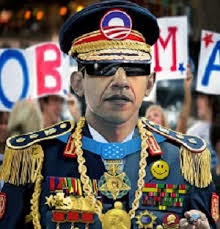
Several witnesses were ready to testify at the trial, but when they arrived at the airport to travel to the city in which the trial was being held they found out that suddenly they were on a no-fly list!
http://boingboing.net/2013/12/04/dhs-stalls-no-fly-list-trial-b.html?utm_source=dlvr.it&utm_medium=twitter
It just gets funnier by the minute. And starts to resemble an episode of The Untouchables: Elliot Ness finally gets Frank Nitti and Al Capone to go to trial, and when the time for the trial comes up all the prosecution witnesses turn up dead. In Our Supreme Leader's case, they all end up on a no-fly list so they can't travel to the city to testify. They should probably be grateful they're not wearing cement overshoes and swimming with the fishes.
Let us all join together in singing the Star Spangled Banner.
 |
| Bananas for the leaders of the Banana Republic |
Friday, November 29, 2013
ADVENT: THE ANCIENT LONGING

http://youtu.be/1cEUx3VDpL8
And so it begins, that period of expectation which is the time of Advent. It is another link with our ancestors, in which we share their longing for the coming of the Messiah. That we have this unbroken link is one of the glories of our Faith.
To face this holy time with the right dispositions of mind and heart, amid all that bombards us and which take our thoughts away from Advent, is a task that even many of our fellow Catholics of old never had to face. They did not have to contend with Walmart and television, and they were spared the modern indignity of having their carols desecrated by talent challenged pop musicians. They had silence and stillness. It is what we need moderns need, too: the time to begin stillness, and silence
While it may seem in glaring contradiction to our call for silence at this time, we can provide balm to our troubled souls with the music inspired by this time, beginning with, for example, the O Antiphons:
http://youtu.be/S4dCLJ_9a7Q
These are normally recited, or sung, during the final days of Advent, the seven O Antiphons commencing on December 17th. But it is not inappropriate that we can take part in them even earlier as we continue the days of preparation.
Some weeks back our friend Timothy Cullen wrote here about the beauty of the music of Hildegard von Bingen. An example, lasting over an hour let us warn you, can be heard here:
http://youtu.be/RHXOGcNVAQU
Such music is so beautiful to the ear, and thus to the mind and the heart, that it cannot help but add to our Advent.
But can anything compare with sitting in a beautifully adorned Church in the presence of the Blessed Sacrament in complete quiet? Very little. But I say let us have both; let us have our contemplation in stillness, and let us also hear the voices of our ancestors as represented by talented modern artists. After all there is a reason God gave us music. But it is both of these things that form a part of the longing we share with the ancients.
Beautiful music and profound silence are saying something to us:
People, look to the East.
Wednesday, November 27, 2013
THE DAY OF WASTEFUL CONSUMPTION
It is not my intention to write too much about this yearly orgy of spending which is to commence this Friday following the US creation known as Thanksgiving. But one appalls at the waste.
Not to mention the mayhem that grows worse every year on these days of binge shopping for items we do not need preparing for Christmas which, thanks to the materialist mindset, is thrown in front of our faces from September onwards without even a cursory acknowledgement that we prepare for Christmas by keeping a good Advent.
But why waste words? Writers such as I can not stop this thing, which has come to be known in a serio-comic way as Black Friday. It is too ingrained in the mindset, and those politicians who cooked up their "Thanksgiving" holiday in the 19th century so as to upstage Advent and Christmas knew what they were doing. Ultimately it was done by Money for Money, as are most ventures of the Enlightenment Personified, the United States.
Waste and Consumption are twin devils that are everywhere and always promoted by the Money Interests. And why not? They have the most to gain....while we have the most to lose.
On a happier and more profound note, Advent is coming.
[Here is another interesting take on the American holiday, from Thomas di Lorenzo: http://www.lewrockwell.com/2013/11/thomas-dilorenzo/lincoln-nationalized-thanksgiving/]
Not to mention the mayhem that grows worse every year on these days of binge shopping for items we do not need preparing for Christmas which, thanks to the materialist mindset, is thrown in front of our faces from September onwards without even a cursory acknowledgement that we prepare for Christmas by keeping a good Advent.
But why waste words? Writers such as I can not stop this thing, which has come to be known in a serio-comic way as Black Friday. It is too ingrained in the mindset, and those politicians who cooked up their "Thanksgiving" holiday in the 19th century so as to upstage Advent and Christmas knew what they were doing. Ultimately it was done by Money for Money, as are most ventures of the Enlightenment Personified, the United States.
Waste and Consumption are twin devils that are everywhere and always promoted by the Money Interests. And why not? They have the most to gain....while we have the most to lose.
On a happier and more profound note, Advent is coming.
[Here is another interesting take on the American holiday, from Thomas di Lorenzo: http://www.lewrockwell.com/2013/11/thomas-dilorenzo/lincoln-nationalized-thanksgiving/]
Sunday, November 24, 2013
MR PUTIN AND THE POPE, THE 25TH OF NOVEMBER

Even now. Of the Three Theological Virtues, all of equal value, the virtue of Hope is perhaps the one on most people's minds, those who are of the Faith at any rate. As everything is crashing down around us, and it is, hope is a virtue that I, for one, would like to keep very much in mind.
It is with that cognizance of this particular theological virtue that I offer these few thoughts on the upcoming meeting tomorrow, November 25th, between Vladimir Putin and the Pope, a meeting apparently requested by Mr Putin himself and readily agreed to by Francis. We don't know what will be discussed at this meeting but preliminary reports inform us that it will concern for the most part the terrible situation of Christians in the Middle East in general and Syria in particular. God be thanked for that.
Yet I am not ashamed to admit that I do hope, at least a little, for the beginnings of a miracle. Or should we say another miracle, because we had a rather interesting miracle on September 7th, when the USA was getting ready to smash into smithereens the nation of Syria, but was stopped by both a papal plea for fasting and prayer and the diplomatic genius of Vladimir Putin (I remain firm in the opinion that the one followed the other). What precisely that other miracle might be I obviously cannot say but I can hope that it could portend the beginning, even if a very small one, of a rapprochement between the Eastern Church and Rome, or that it might be something equally momentous.
Equally momentous? I shall let the philosopher Vladimir Solovyev say it, a man whose life centered upon the desire to convince the Orthodox to return to the Universal Church:
"The profoundly religious and monarchic instinct of the Russian people, certain prophetic events in its past history, the enormous and compact bulk of its Empire, the great latent strength of the national spirit in contrast to the poverty and emptiness of its actual existence - all this seems to indicate that it is the historic destiny of Russia to provide the Universal Church with the political power which it requires for the salvation and regeneration of Europe and the world." (1)
Solovyev spent his short life trying to bring the Eastern Churches back into the bosom of the Catholic Church, which he terms always the Universal Church, so when he is saying that Russia must be the guardian and protector of the Universal Church he is saying that the Church could see its work on earth defended by a great Christian power. To Solovyev the philosopher this whole idea dovetails with his vision of the day when the schism of 1054 A.D. will be ended and Russia will emerge as the shield that will protect the True Faith in a reunited Church of the East and the West.
Mr Putin has already met with the previous two Popes. But the world has changed with startling rapidity this past Fall and what he spoke about to the last two Popes was most likely somewhat different than what these two men might speak about today. Among other things Putin appears to be, according to published interviews, genuinely concerned by the split in the two Churches. This alone is most interesting.
I imagine it would absolutely terrify the world's neo-pagan rulers if a serious, Christian, powerful Russian ruler would become the defender of the world's Christians. A delightful thought.
But I must not allow my glasses to become too rosy-colored. The current Russian leader may not wish to be Christendom's new guarantor, or perhaps God does not think the time is yet ripe. And He may not think that the time is yet right for an end to the Great Schism. So many times in the past the delicate relations between the Catholics and the Orthodox have come to grief often because of clumsiness on the part of the one or the other. That could easily happen here. And there is "baggage" being carried by both parties that could ruin everything. We must leave the dealing of that baggage to God.
Right now, as we write, we are faced with an extremely powerful, militaristic, usurious and openly pagan government intent on forcing the world to accept every conceivable vice at the point of a gun. On the other side of the world we have a once-powerful government slowly beginning to be healed from a cruel dictatorship of eighty years standing which is going from strength to strength. It is a fascinating situation.
The Pope and Vladimir Putin will meet on the feast of Sr Catherine of Alexandria. St Joan of Arc named St Catherine as one of those who counseled her. She is a Saint honored both in the East and the West. Five days later, November 30th, is the feast of St Andrew. An interesting week for such a meeting to occur in.
1.) Vladimir Solovyev, Russia and the Universal Church, Trans. by Herbert Rees, London, Geoffrey Bles, The Centenary Press, pg. 29


 |
| Putin and the Pope, earlier today. |

[Of course the Pope will be meeting with the snake oil salesmen from America shortly after his meeting with Mr Putin, and with the snake himself on December 2nd, which I fully expect will be an attempt to defuse any good that might have come from the meeting between Putin and the Holy See. But I am hopeful that the Holy Father will not allow himself to be bamboozled by them.]
Interesting update:
A small but not unimportant action by Russia: http://rt.com/politics/russia-abortion-advertising-ban-266/
Thursday, November 21, 2013
THE WAR OF THE WORDS

Sage advice from blogger Dad29:
"One of the First Things in politics is 'Never, ever, adopt the language of the enemy.'"
Now, dear, old Dad29 is more of a political blogger who writes much about politics, often from a Republican Party perspective, but his quote can be easily applied to any conflict between two ideologies. What he says is correct: don't adopt the language of your enemy.
Unfortunately, when speaking about the homosexual perversion modern man has been doing exactly that. Worse, modern Catholics have been doing the same. They are taking a perfectly innocent word "gay" and using it to describe something unspeakable. My dear fellow Catholics I am telling you very bluntly that when you use that word to describe sodomite behavior you are signalling defeat in a very crucial battle of a very real war.
Nor is this a small point. When the enemy - and let us name the enemy: a satanic juggernaut using perversion as its weapon of choice - defines the terms, and the opponents accept those terms, the opponents have already lost. Every time the word "gay" is used to describe this unnatural vice we concede ground. It is one of the most clever devices of the Overseers of the Pit to change the meaning of words in such a way that men call evil good and good, evil. It is that upside-down mentality of the devils, which turns Masses into Black Masses and crucifixes upside-down that drives this war on words. If we here could but succeed to convince our fellow writers to stop using that word in its perverted meaning we would have achieved something.
Even solid, thinking Christians use the word. My very dear friends this cannot go on. The sodomites laugh and smirk among themselves when they see their adversaries using their own terminology. And why shouldn't they? They see a battle, not a minor skirmish, that they have won.
This writer once had a brief correspondence with a noted Catholic writer regarding his continued use of that word to describe the homosexual perversion. I suggested that "buggery" would be a better and more exact word to use to describe this but he brushed that aside by saying, quite frankly, that since "gay" is now the accepted word to use to describe them (accepted? by whom?), and that it is now widely in use, that he felt perfectly comfortable in using it in the future. He added that the word "buggery" was somehow too old-fashioned to be taken seriously. (We must therefore presume that other such words as "murder", "bestiality" and "adultery" would also make his list of old-fashioned words not to be used any longer.) A true futurist, he. But this is what we are up against.
As cringe-making as it is to see the word "gay" misused so outrageously it is equally troubling to redefine serious mortal sins as "attractions". Well, yes, they are attractions: sinful attractions. Mortally sinful attractions to be more precise. But when some frightened souls are discussing buggery the word "sin" must be eliminated and substituted with something more medical-sounding, such as "same sex attraction". Once again, many Christians have begun using this strange phrase in such a way as to suggest that a sodomite is merely someone suffering from some kind of disease, like pneumonia or the mumps, and that therefore we should not encourage him to get into the Confessional but instead we should commiserate with him in his unfortunate malady. I will certainly admit that there are those who are plagued with the terrible temptation to commit these awful acts and that if we are aware of someone so suffering we should of course sympathize but with firmness. When your mother discovered you were shoplifting candy bars at the grocery store when you were a child did she deal with you as someone with some sort of sickness, or did she take a firm hand, practicing "tough love"? I believe we can be safe in assuming that she did not explain to the shopkeeper that her child was suffering from Candy Filching Attraction and that he must try to understand.
Even worse we now have a phrase to describe serious, destructive mortal sin that is the cleverest of them all. I refer, of course, to that nebulous condition, "sexual orientation" which emerged out of thin air a few decades ago. Truly, that phrase has come directly from the halls of Hell. It is brilliant and meaningless at one and the same time. Like Humpty Dumpty's vocabulary it is designed to mean whatever it is we want it to mean. Brilliant it is because it builds upon the dubious "SSA" myth and embellishes it. It is designed to make us accept anything, any carnal appetite no matter how twisted, as something we are born with. If your interest is in pederasty, or God knows what else, it is simply your orientation and you must just live with it and not have to be plagued with admonitions to mend your ways. The phrase dovetails perfectly with the "born that way" nonsense that the unthinking have begun to accept more casually. Good people have fallen victim to this phrase, causing them to put aside their revulsion of vice, and that is the most saddening thing of all. A more perfect illustration of preternatural influence would be difficult to find.
This is a campaign of mendacity that has had sensational success. If the same methods were to be used to convince the public that bear-baiting or cannibalism are now acceptable, just like sodomy now supposedly is, it most likely would have worked in the same way. How prophetic was the Church then when She warned that the acceptance of contraception and the contraceptive mentality would lead to crimes such as abortion and sodomy. The same mind that would now accept such unspeakable evils as abortion and sodomy would soon without question soon accept even more of the perverse. Indeed I fully expect that in a very short time you will be able to legally murder your mother. When that time comes they will surely come up with a soothing, medicinal phrase to describe matricide. Because using the right words is the crucial thing.
That is why this deadly war is a war of the words.
Dear friends, do you really, truly want to help these people who are succumbing to the homosexual temptation? These people are headed for the abyss as we well know If we wish them to avoid that then we must begin to rethink our sentimental views about their condition. Sentimentality about something so gravely serious as this will do nothing to rescue these poor souls whose manner of living will bring them certain spiritual death unless they give up this vice. It is a vice that is degrading them and even causing them to take leave of their own senses. Help for them can come by not mincing words about what it is we are talking about. Ending the use of fanciful phrases and words to describe their condition will do more good for them than trying to find excuses.
We especially exhort our Bishops to lead the way in telling it like it is and to strenuously avoid the nice, calmly words like "gay", "sexual orientation" and whatever else they will come up with to put lipstick on a pig. For remember, Your Lordships, that if you don't start to courageously step up to the plate with clear, unequivocal language you will lose one small battle after another, and will soon find yourselves like Lemuel Gulliver, tied down with tiny ropes - but enough of them so you will no longer be able to move. The world is boxing you into a corner, dear Bishops; while you still have time you must start speaking out, with clarity and strength. They have all the forces of evil on their side and they are formidable forces. But you have one up on them...if only you would choose to use Him.
I have a sense of futility about all this. I have lost count of how many letters to the editor, or responses in blogs I have written to attempting to encourage people, especially those who know better, to cease using the Enemy's terms of reference. Very few have been convinced, and whether it is because my writing skills are not equal to the task or because people believe it to be a trivial matter my efforts have met with only a very limited success. But as this war is indeed a war and because this point is far from trivial I shall continue trying to point out that calling things honestly what they are, even in the most charitable way possible, is crucial to efforts to wrest them away from the wrong path they are taking, and that every inch conceded to the promoters and enablers of unnatural vice, like using the word "gay" to describe something unspeakable, is another inch of ground that we have lost.
We have lost far too much ground already.
Subscribe to:
Posts (Atom)
